
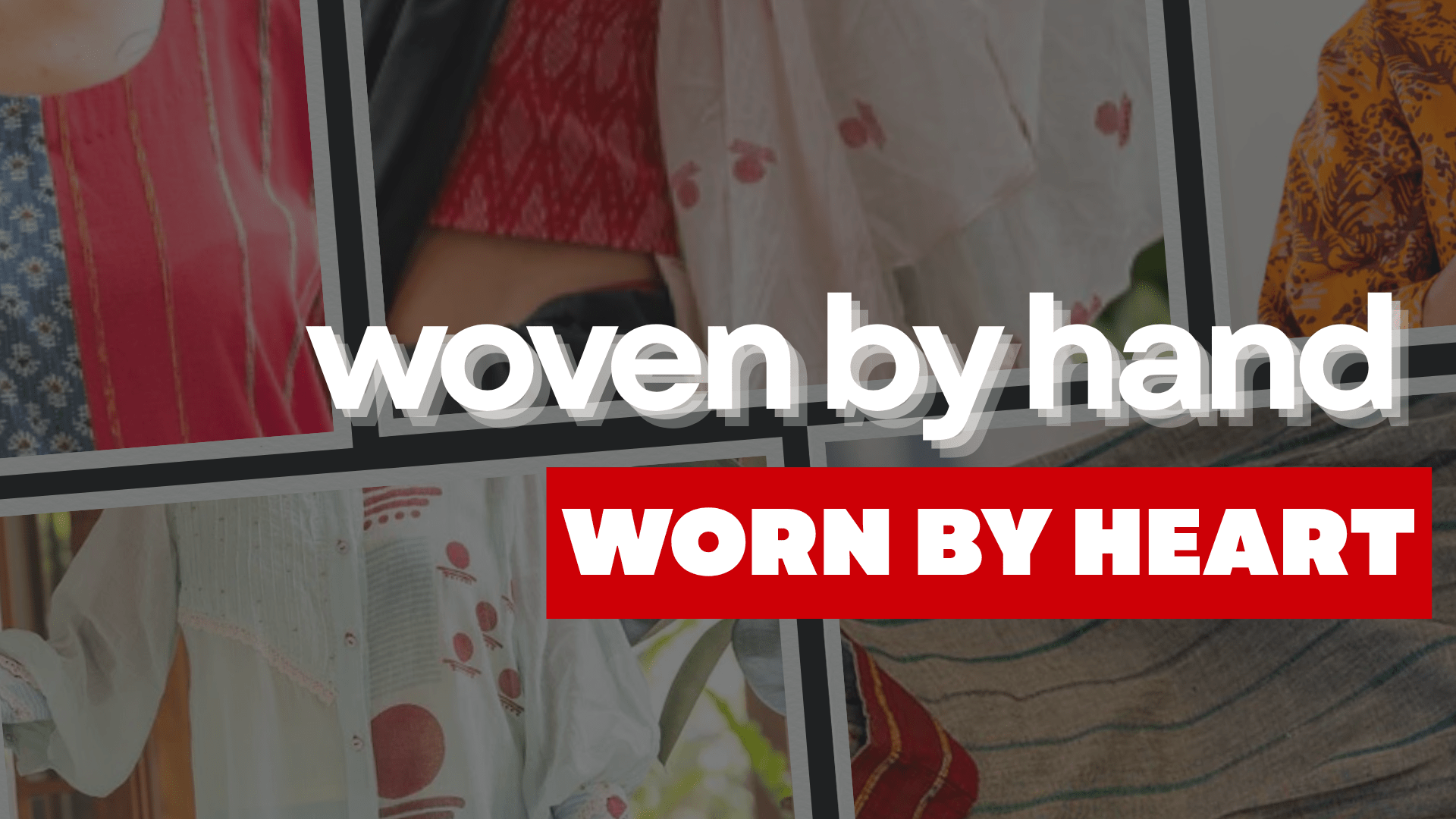
The Art of Craftsmanship: Where Tradition Meets Sustainability
In a world racing toward fast fashion, there exists a quieter, more profound narrative — one woven thread by thread, dyed with intention, and crafted with generations of wisdom. At Prathaa, we don't just create clothing; we curate stories that celebrate India's rich textile heritage while championing sustainable living.
Each Prathaa red is a celebration of craft, a testament to the hands that shaped it, and a bridge between the past and a more conscious future.
Khesh: The Poetry of Renewal
When old sarees reach the end of their lifecycle, they don't fade into obscurity — they transform. Khesh, one of Bengal's most sustainable textile traditions, breathes new life into discarded fabric strips, weaving them into rustic, textured masterpieces
The Story Behind Khesh
Originating from rural Bengal, Khesh (also spelled Kantha in some regions) represents the ultimate zero-waste philosophy. Traditionally, women would layer old cotton sarees, stitch them together with simple running stitches, and create quilts or wraps for their families. This practice, born from necessity, has evolved into a sophisticated art form that embodies:
-
Renewal: Every thread tells a story of rebirth, transforming what was discarded into something cherished
-
Resilience: The woven texture speaks to the strength found in reimagining resources
-
Sustainability: True circular fashion, practiced long before the term became trendy
The beauty of Khesh fabric lies in its imperfections — the subtle variations in texture, the gentle irregularities that remind us each piece is touched by human hands. When you wear Khesh, you're not just making a fashion statement; you're wearing a philosophy.
"Khesh teaches us that beauty doesn't always come from the new, but from the courage to reimagine the old." — Traditional Bengali saying
According to textile historians, Khesh weaving represents one of India's earliest forms of sustainable textile practices, predating modern sustainability movements by centuries.
Explore our Khesh Collection → Shop Khesh
Jamdani: Where Patience Becomes Art
If Khesh is poetry in renewal, Jamdaniis poetry in precision. This ancient weaving technique, recognized by UNESCO as an Intangible Cultural Heritage of Humanity, creates intricate patterns that appear to float on the finest muslin, as if suspended by air itself.
The Meticulous Craft of Jamdani
Weaving Jamdani is not merely a skill — it's a meditation. Each motif is created using a supplementary weft technique, where artisans manually add threads to create designs without using any additional tools beyond the handloom. The process demands:
-
Extraordinary patience: A single saree can take 3-6 months to complete
-
Mathematical precision: Weavers count threads with such accuracy that patterns emerge with geometric perfection
-
Artistic vision: Every design is committed to memory, passed down through generations
The origins of Jamdani weaving trace back over 2,000 years to Dhaka (now in Bangladesh) and West Bengal. Historical records from the Mughal period describe Jamdani muslins as "woven air" and "evening dew," so fine that entire sarees could be drawn through a wedding ring.
UNESCO's recognition of Jamdani in 2013 acknowledged not just the technique, but the living tradition that continues to thrive through master weavers who dedicate their lives to this art form.
The Prathaa Jamdani Experience
When you drape a Prathaa Jamdani, you're wearing:
-
Hours of concentrated human effort
-
Patterns that have adorned royalty for centuries
-
A connection to artisans who see their work as a spiritual practice
Discover Timeless Elegance → Shop Jamdani
Ikkat: The Mathematics of Beauty
Ikkat(also spelled Ikat) represents the pinnacle of pre-planning in textile art. This resist-dyeing technique requires dyeing the threads before weaving, demanding that artisans visualize the final pattern with such precision that when woven, geometric perfection emerges.
The Ikkat Process: Where Intention Meets Thread
Creating authentic Ikkat involves a complex sequence that makes every piece a marvel of planning:
-
Design Conception: Patterns are meticulously calculated on graph paper
-
Thread Bundling: Yarns are bound in specific sections to resist dye
-
Sequential Dyeing: Multiple dye baths create the color palette, with threads tied and untied between each session
-
Precise Weaving: The dyed threads are woven, and if calculations were correct, the pattern emerges
The traditional Ikkat technique practiced in regions like Odisha, Gujarat, and Andhra Pradesh has remained largely unchanged for centuries. What makes it extraordinary is that every single thread carries intention — dyed to a predetermined pattern before it ever touches the loom.
Types of Ikkat at Prathaa
-
Single Ikkat: Either warp or weft threads are dyed
-
Double Ikkat (Patola): Both warp and weft are resist-dyed — the most complex and time-intensive form
-
Contemporary Ikkat: Traditional patterns reimagined for modern sensibilities
The characteristic "feathered" or slightly blurred edges of Ikkat patterns aren't imperfections — they're the signature of authentic handwork, where dyes naturally bleed at the resist boundaries, creating a softness that machine-made versions can never replicate.
According to textile research, master Ikkat weavers can take up to 20 years to perfect their craft, demonstrating mathematical precision that rivals computer programming.
Experience Geometric Elegance → Shop Ikkat
These Aren't Fabrics; They're Stories
At Prathaa, we believe that what you wear matters — not just aesthetically, but ethically and culturally. When you choose handloom, you're choosing:
Environmental Consciousness
-
Zero electricity in traditional weaving
-
Natural dyes and sustainable materials
-
Minimal carbon footprint compared to industrial production
- Circular fashion principles embedded in techniques like Khesh
Economic Justice
-
Fair wages for artisan communities
-
Preservation of dying crafts through active patronage
-
Rural employment that keeps traditional skills alive
-
Women empowerment through craft cooperatives
Cultural Preservation
-
Living heritage passed through generations
-
Regional identity expressed through distinctive techniques
-
Artistic freedom for weavers to innovate within tradition
-
Story continuation — every piece connects you to centuries of wisdom
The handloom sector in India employs over 4.3 million weavers and allied workers, making it one of the largest unorganized economic activities in the country. Yet mechanization and fast fashion threaten these traditions. Every handloom purchase is a vote for cultural preservation.
The Prathaa Philosophy: Handspun, Handwoven, Handed Down
Our commitment goes beyond retail. We work directly with weaver cooperatives, ensuring:
-
Transparent supply chains where you know who made your garment
-
Pre-orders and conscious production to avoid waste
-
Education initiatives that teach the next generation these precious skills
-
Design collaborations that honor tradition while embracing contemporary aesthetics
When you wear Prathaa, you're not just wearing clothes — you're wearing centuries of accumulated wisdom, the patience of artisans who refuse to compromise, and the hope that slow, meaningful fashion can thrive in our fast-paced world.
Join the Movement
Explore our collections and discover the story that speaks to you:
-
Khesh Collection — Embrace renewal and resilience
-
Jamdani Collection — Wear poetry in precision
-
Ikkat Collection — Experience geometric intention
Read More About Our Craft
The Choice Is Yours
Every purchase is a choice. Choose stories over mass production. Choose artisans over machines. Choose sustainability over disposability.
Choose Prathaa. Choose tradition that doesn't fear the future.
Start Your Journey → Shop All Collections
Follow us on Instagram | Facebook to see our weavers at work and stay updated on new collections.
Written by Prathaa Weaving Traditions

















Leave a comment
This site is protected by hCaptcha and the hCaptcha Privacy Policy and Terms of Service apply.