
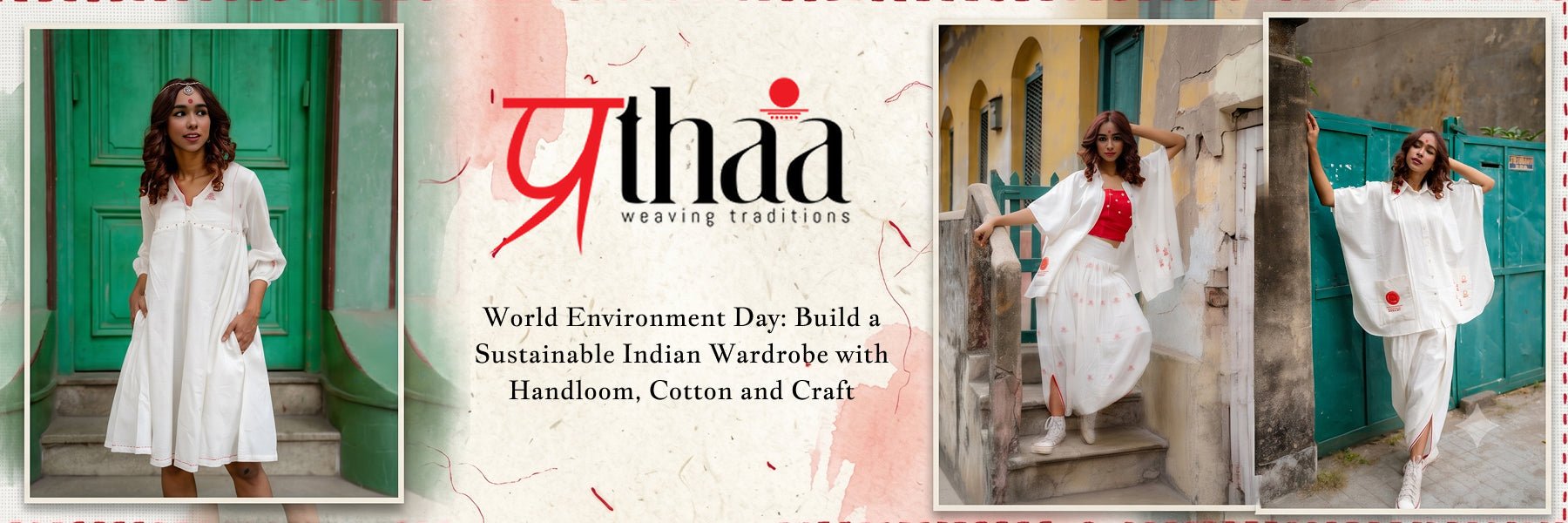
World Environment Day: Build a Sustainable Indian Wardrobe with Handloom, Cotton and Craft
For World Environment Day, the most powerful fashion choice is not a one-day green outfit. It is the wardrobe you keep wearing after the campaign hashtag fades.
Why World Environment Day belongs in your wardrobe
World Environment Day arrives every June with a familiar invitation: pause, notice what we consume and choose better. For fashion, that invitation feels especially personal. Clothes touch the body every day. They hold memories, mark festivals, travel through seasons and often become the first visible expression of what we value. In India, where heat, humidity, festivals, workdays and family gatherings all ask different things from our wardrobes, conscious dressing cannot be only about minimalism. It has to be about pieces that are comfortable and versatile enough to wear often, beautiful enough to cherish and rooted enough to feel meaningful.
That is where Prathaa’s language of handloom, cotton, Jamdani and the signature Bindi motif becomes relevant. A sustainable wardrobe is not built by buying dull basics that feel disconnected from culture. It is built by choosing clothing that brings together comfort, craft and identity. When a handloom cotton kaftan becomes a work layer, a travel shirt and a festive jacket, it earns more than shelf space. When a white cotton dress moves from brunch to an intimate gathering with only a change of jewellery, it reduces the need for “occasion-only” shopping. Slow fashion becomes practical when repeat wear feels joyful.
What makes a sustainable Indian wardrobe different?
The Indian sustainable wardrobe has its own rhythm. It must breathe during humid afternoons, layer lightly in air-conditioned offices, handle long commutes and still feel special during celebrations. Synthetic trend pieces may look attractive for one outing, but they often struggle in real weather. Handloom cotton and linen, on the other hand, make sense for the body and the climate. They are airy, tactile and naturally suited to the way Indian women move through cities like Mumbai, Kolkata, Bengaluru, Pune, Chennai and Delhi.
Sustainability also means looking beyond a single fabric label. Ask whether the garment can be styled in more than one way. Ask whether the silhouette will feel relevant next year. Ask whether the craft adds value beyond decoration. Prathaa’s best-selling pieces answer these questions through ease and detail: anti-fit forms, pockets, convertibility, Bindi embroidery, Jamdani textures and white canvases that can be restyled with colour. These details help a garment live longer in the wardrobe.
This is also why sustainable fashion in India cannot be copied directly from Western capsule-wardrobe advice. Our wardrobes carry saris, blouses, relaxed co-ords, work tops, festive layers, travel pieces and easy everyday dresses. A good piece has to move across these contexts. A cotton shirt should not be only a shirt; it should also work as a cover-up, a light jacket or a layer over a dress. A dhoti set should not be restricted to a single event; the top and bottom should be able to create separate looks. When a consumer sees this possibility before buying, the purchase becomes more thoughtful and the garment gets more chances to be worn.
The Prathaa way: conscious style without losing emotion
Prathaa does not treat sustainability as a flat, beige idea. Its pieces carry an emotional Indian visual vocabulary: the red Bindi, the quiet power of white, the tactility of handwoven surfaces and silhouettes that borrow from ethnic and Indo-Western dressing. This matters for SEO, but it matters even more for real shoppers. People searching for sustainable clothing in India are not only asking for eco-friendly fabric. They are asking: “Will this look like me? Will this work in my life? Can I wear it to work, lunch, a festive gathering and a family photo?”
The best answer is a wardrobe of pieces that are easy to repeat but never feel repetitive. A white kaftan shirt can be worn over denim, with wide pants, open as a jacket or buttoned as a statement top. A panelled dress can be styled with flats for a weekday or silver jewellery for a slower evening. A kaftan and dhoti set can be worn together for impact or separated into multiple looks. This is where conscious fashion becomes conversion-friendly: each product earns its value through versatility.
How to build your World Environment Day capsule
Start with breathable neutrals. White, ivory and black may look simple online, but in Indian styling they become a canvas. Pair white handloom cotton with red lips, silver jewelery , a printed stole or tan sandals. Add one statement craft detail, not ten. A Bindi motif, shell detail, Jamdani texture or contrast piping can carry the story without overwhelming the look.
Next, choose silhouettes with movement. Tight, trend-driven clothes are often the first to be abandoned in hot weather. Anti-fit shirts, A-line dresses, dhoti bottoms and flared silhouettes allow airflow and comfort, which makes repeat wear more likely. Finally, commit to outfit rotation. The most sustainable garment is not only the one made with better materials only; it is the one you keep reaching for because it works. Create three styling formulas for every purchase: casual, work-friendly and festive. If a piece cannot move through at least two of those moments, it may not belong in a slow wardrobe.
A useful World Environment Day exercise is to audit your closet before you shop. Pull out the pieces you wear most often and look for patterns: breathable fabric, room to move, easy colour, pockets, forgiving fit, a detail that makes you feel dressed without much effort. Then look at the pieces you rarely wear. Are they uncomfortable, too seasonal, difficult to wash, or too dependent on a single occasion? This simple audit helps customers buy with more self-awareness. It also creates a natural bridge to Prathaa’s strengths: relaxed silhouettes, handloom cotton, craft-led details and clothes made to return to your life repeatedly.
Prathaa best-seller picks for conscious repeat wear
The following Prathaa best-seller picks work beautifully for World Environment Day content because they show sustainability as lived comfort, not just a claim. They are product-led, image-friendly and easy to place inside a blog, collection banner, social carousel or email campaign. Each one also supports high-intent keywords such as handloom cotton clothing, sustainable Indian fashion, eco-conscious Indo-Western wear and breathable cotton outfits for Indian weather.
Care is part of sustainability
A conscious wardrobe also depends on how garments are cared for. Handwash gently when recommended, avoid harsh drying, store white garments carefully and repair small issues before they become reasons to discard a piece. Handloom is alive with slight variations; those irregularities are not flaws but proof of touch. When customers understand this, the relationship with the garment changes. They stop expecting factory-perfect sameness and start valuing craft.
Pro Tip - Handwoven cotton gets better with every wash
Good care is also good styling. A crisp white handloom piece can feel ceremonial with jewellery, quiet with sandals, creative with a printed scarf and sharply modern with clean sneakers. A garment that is cared for well keeps its shape, colour and emotional value for longer. That matters because sustainability is not only an environmental idea; it is a relationship between the wearer, the maker and the object. The longer that relationship lasts, the more meaningful the purchase becomes.
This World Environment Day, Prathaa can position itself as a brand that makes sustainable Indian fashion feel wearable, emotional and useful. The message is simple: dress beautifully, but buy with memory. Choose garments that breathe with the climate, carry the hand of the maker and return to your life many times over. That is how one day of environmental awareness becomes a year-round wardrobe habit.

White Handloom Cotton Shvet Kaftan Shirt
₹3,000
A breathable mul cotton kaftan shirt with Bindi detailing, made for repeated styling as a shirt, jacket or soft layer.

White Handloom Cotton A-Line Paneled Shvet Dress
₹3,600
A handloom mul cotton dress with pockets, panelled ease and signature Bindi craft details.

White Jamdani Shvet Cotton Kaftan and Dhoti Set
₹6,150
A versatile two-piece set combining anti-fit ease, Jamdani texture and separates that can be worn together or individually.
Frequently Asked Questions
What should I wear on World Environment Day in India?
Choose breathable, repeat-wear pieces such as handloom cotton dresses, linen sarees, kaftan shirts, dhoti sets and versatile separates that can be styled across work, casual and festive occasions
Is handloom clothing sustainable?
Handloom can support slow fashion when garments are made in natural fabrics, designed for longevity and valued for their craft. The most sustainable choice is also the piece you will wear, care for and repeat often.
Why is cotton good for Indian weather?
Cotton feels breathable and comfortable in hot and humid Indian climates, making it easier to wear pieces regularly instead of saving them for rare occasions.
How can I build a slow fashion wardrobe?
Start with versatile silhouettes, breathable fabrics, neutral base colours and meaningful craft details. Buy fewer pieces, style each in multiple ways and care for them properly.
Which Prathaa pieces are good for conscious everyday wear?
Prathaa’s handloom cotton kaftan shirts, A-line dresses and Jamdani separates work well because they combine ease, craft and multiple styling possibilities

Written by Prathaa Weaving Traditions
















Leave a comment
This site is protected by hCaptcha and the hCaptcha Privacy Policy and Terms of Service apply.