
Poila Boishakh 2026: What to Wear This Bengali New Year — A Handloom Guide in Red & White
Poila Boishakh — the Bengali New Year — falls on Wednesday, April 15, 2026, ushering in Bengali year 1433. For over 300 million Bengalis across West Bengal, Bangladesh, Tripura, and the global diaspora, this day carries a singular emotion: noboborsho, a fresh beginning.
And at the heart of every Poila Boishakh morning — before the prabhat pheri, before the first spoonful of payesh, before the elders are touched at the feet — is the ritual of getting dressed. Specifically, getting dressed in laal ar shada (red and white).
If you have ever wondered why Bengali women reach for a white saree with a red border on this day, or if you are looking for the perfect Poila Boishakh 2026 outfit that honours that tradition without feeling dated, this guide is for you.
Why Do Bengalis Wear Red and White on Poila Boishakh?
The pairing of red and white on Bengali New Year is not a trend. It is a language — one that has been spoken through textiles for centuries.
White represents purity, peace, and new beginnings — fitting for the first day of a new calendar. Red symbolises strength, auspiciousness, and shakti — the energy needed to step into the year ahead. Together, the laal paar shada sharee (white saree with a red border) has become the most iconic outfit in Bengali festive culture.
Historically, this colour combination also ties back to Haal Khata — the tradition where Bengali shopkeepers open new ledger books on Poila Boishakh. The ledgers had red covers with white pages, symbolising a clean financial start. The clothing echoed the same spirit: a fresh page, bound in auspicious colour.
At Prathaa, where the red bindi is our founding identity, this palette is not just seasonal — it is personal. Every thread, every motif we create in red and white carries forward the same energy that Poila Boishakh celebrates: honouring where you come from while stepping confidently into what is next.
For the Saree Lover: Laal Paar Shada Sharee, Reimagined
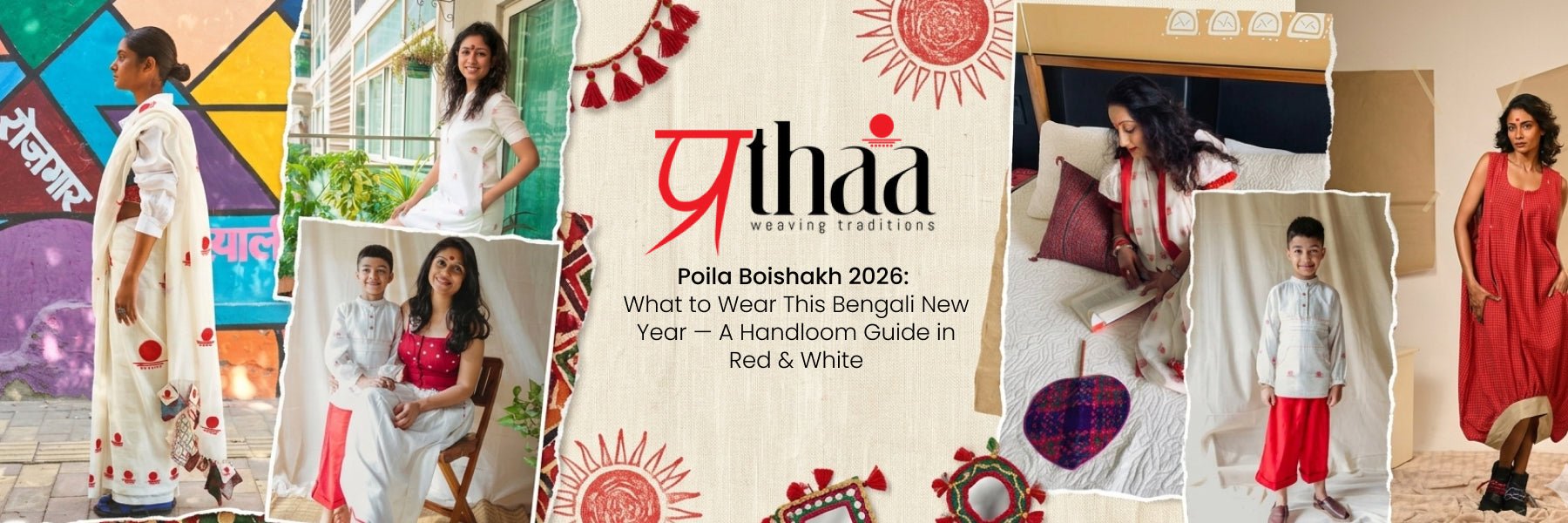
Nothing says Poila Boishakh quite like draping a white cotton saree with a red border. But at Prathaa, we weave the tradition with a modern hand.

White Mul Cotton Bindi Saree
A white mulmul cotton saree adorned with red Bindi appliqué motifs across the body and pallu, finished with colourful tassels. Woven in 84-count mul — soft as a feather, draping like butter. This is Prathaa's signature Bindi saree, and it was practically made for Shubho Noboborsho mornings.

White Jamdani Cotton Bindi Saree
For those who want their saree to tell a deeper story. This white Jamdani saree features hand-woven red bindi motifs on the pallu, a red border, and red-and-white tassels. It comes with a red running blouse piece. The Jamdani weave is indigenous to Bengal, making this piece doubly meaningful for Poila Boishakh.
Beyond the Saree: Indo-Western Red & White for Noboborsho
Not every Bengali woman wants to drape six yards on a Wednesday morning — and that is perfectly fine. Poila Boishakh is about intention, not obligation. These Indo-western pieces carry the same laal ar shada spirit in silhouettes you can wear to a morning prabhat pheri, an afternoon boishakhi mela, or a family lunch.

White Bindi Shirt Dress in Jamdani Fabric
A crisp white shirt dress with red bindi motifs, hand-woven in Jamdani. Cuffed sleeves, front buttons, and the quiet confidence of wearing a tradition you can also pair with sneakers. Perfect for women who want festive without fussy.

White Spaghetti Dress in Jamdani
A relaxed white dress with red handloom detailing at the strap and hand-woven bindi motifs. It has pockets. It has gathers at the yoke. Summer and shubho noboborsho arriving together.

White Jamdani Kaftan
A breezy white kaftan in Jamdani fabric with hand-woven bindi motifs and a drawstring waist. Wear it as a dress for morning festivities or layer it over pants for a more structured evening look.

Red Taana Baana Balloon Jacket Dress
For the woman who wants to lead with red this Noboborsho. An oversized balloon-style jacket dress in handloom red cotton checks. Buttons on both side seams, a waist-level armhole for drama, and the kind of presence that makes people ask "ki sundor dress! Kothay peli?"
Mix and Match: Build Your Own Boishakh Look
Part of what makes Prathaa special is that individual pieces can be styled together for a complete laal-shada outfit. Here are two combinations worth considering:
Look 1 — The Contemporary Bengali
Pair the White Anti-Fit Apple Cut Shirt (white Jamdani with red bindi motifs and red side-panel detailing) with the White A-Line Bindi Skirt (white with red handloom border and pockets). Add jhumkas and gajra in your hair. Done.

White Anti-Fit Apple Cut Shirt
A loose-fit Jamdani shirt with red bindi motifs, mandarin collar, and red handloom detail on the sides. Calmness and serenity, woven into every thread.
Shop →

White A-Line Bindi Skirt
An A-line skirt in white with red bindi motifs, a red handloom border at the bottom, and two pockets. Contemporary femininity at its finest.
Shop →
Look 2 — The Modern Festive
Layer the Shvet White Corset Top over the White Bindi Jamdani Saree for a structured, editorial take on the traditional laal paar shada sharee. Bold, beautiful, and unmistakably Boishakh.
Poila Boishakh for the Little Ones: Twinning in Red & White
In Bengali families, Poila Boishakh is not just an adult affair. Children are dressed in new clothes, fed mishti, and paraded to relatives' homes for blessings. Prathaa makes this part easy — and adorable.

Red & White Mother-Son Twinning Set
A white and red twinning set with a mul cotton corset-dhoti set for mom, paired with a coordinating outfit for the little one. Perfect for those noboborsho family photos that end up on everyone's WhatsApp status.

Kids Red Khesh Skirt Saree & Blouse Set
A red Khesh easy-to-wear skirt saree with a white Bindi Jamdani drape and a red frill blouse. Because every little girl deserves to feel dressed for the boishakhi mela, even if she is just going to dida'r bari.

Shvet Kids White Jamdani Shirt + Red Pants
White Jamdani shirt paired with red pants — clean, comfortable, festive. For kids who would rather run around than sit still for photographs. Handloom cotton ensures breathability through the April heat.
Why Handloom Matters on Poila Boishakh
Bengali New Year is a celebration of heritage. And Bengal's textile heritage — Jamdani, Khesh, Mul, Taana Baana — is among the richest in the world. When you choose a handloom outfit for Poila Boishakh, you are not just getting dressed. You are participating in an economy that sustains artisan families. You are wearing a fabric that carries a human fingerprint in every thread.
At Prathaa, every piece is woven by hand, crafted without electricity in the traditional way. Our fabrics are breathable, naturally dyed, and made from pure cotton — which means they also happen to be the most comfortable choice for a warm April morning in Bengal (or Bangalore, or Boston, wherever your noboborsho finds you).
This is what prathaa (tradition) means to us: not a museum exhibit, but a living, breathing, wearable thing.
Poila Boishakh 2026: Key Details at a Glance
|
Date (West Bengal) |
Wednesday, April 15, 2026 |
|
Date (Bangladesh) |
Tuesday, April 14, 2026 |
|
Bengali Year |
1433 |
|
Traditional Greeting |
শুভ নববর্ষ — Shubho Noboborsho |
|
Traditional Dress Code |
White with red (laal paar shada sharee) |
|
Key Rituals |
Prabhat Pheri, Haal Khata, temple visits, family feasts |
|
Traditional Foods |
Ilish Mach, Payesh, Luchi-Cholar Dal, Shukto |
Frequently Asked Questions About Poila Boishakh Outfits
What is the traditional outfit for Poila Boishakh?
The traditional outfit for women is a white cotton saree with a red border, known as laal paar shada sharee. Women also wear red and white bangles, fresh flowers (often gajra or jui) in their hair, and gold jewellery. Men traditionally wear a white or off-white panjabi (kurta) with dhoti.
When is Poila Boishakh 2026?
Poila Boishakh 2026 falls on Wednesday, April 15 in West Bengal (India) and Tuesday, April 14 in Bangladesh. It marks the first day of the Bengali month of Boishakh and the beginning of Bengali year 1433.
Can I wear something other than a saree for Bengali New Year?
Yes. While the laal paar shada sharee is the most traditional choice, many women now celebrate Poila Boishakh in Indo-western outfits, shirt dresses, kaftans, and kurta sets — as long as the spirit of red and white (or fresh, festive clothing) is honoured. The key is wearing something new and meaningful.
Why are red and white the colours of Poila Boishakh?
Red and white are considered the most auspicious colour combination in Bengali culture. White represents purity and fresh beginnings, while red symbolises strength, shakti, and good fortune. The combination also echoes the traditional Haal Khata ledger books (red cover, white pages) that shopkeepers open on Bengali New Year.
What is the significance of handloom clothing for Poila Boishakh?
Bengal has one of the world's richest handloom traditions, including weaves like Jamdani, Baluchari, Tant, and Khesh. Wearing handloom on Poila Boishakh celebrates this heritage while supporting artisan families. Handloom fabrics are also naturally breathable and sustainable — ideal for the April heat and for making a conscious fashion choice.
What is Shubho Noboborsho?
Shubho Noboborsho (শুভ নববর্ষ) is the traditional Bengali greeting meaning "Happy New Year." It is exchanged among friends, family, and colleagues on Poila Boishakh.
Celebrate Noboborsho with Prathaa
Our Bindi Collection — red motifs on white handloom cotton — carries the same symbolism that Poila Boishakh does: something beautiful, rooted in purpose, passed forward with love. This Shubho Noboborsho, dress in a way that tells your story.

Written by Prathaa Weaving Traditions



















Leave a comment
This site is protected by hCaptcha and the hCaptcha Privacy Policy and Terms of Service apply.