
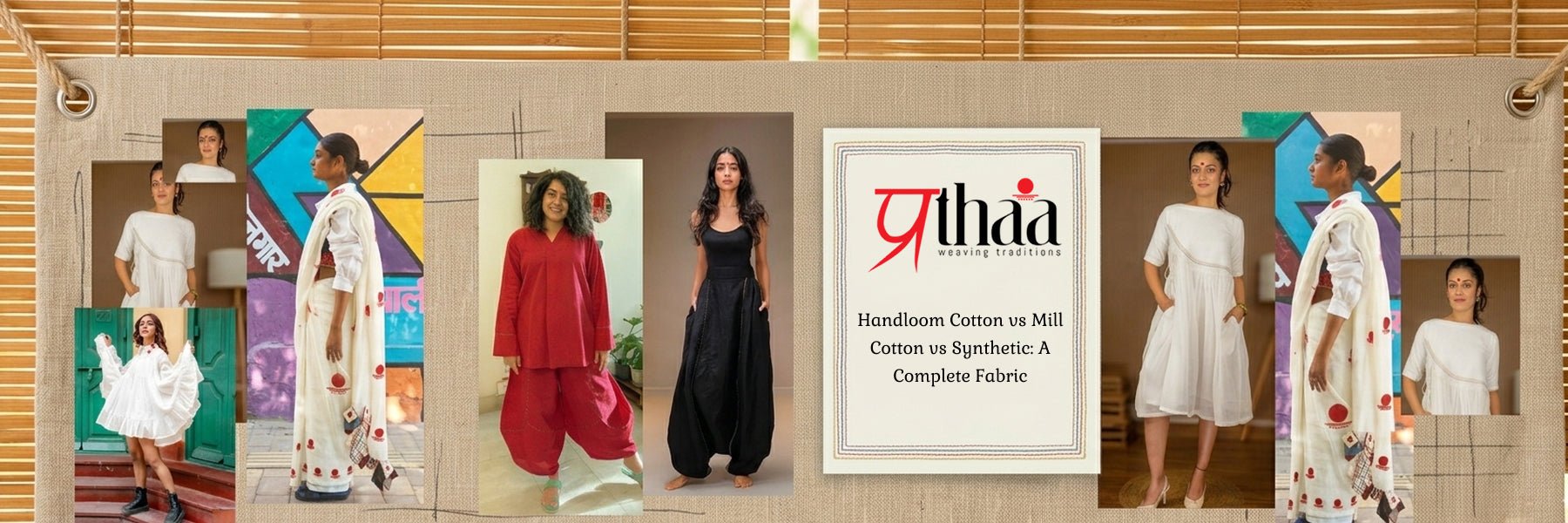
Handloom Cotton vs Mill Cotton vs Synthetic: A Complete Fabric Guide for Indian Summers

You've probably seen this advice a hundred times: "Wear cotton in summer." And it's good advice — as far as it goes. But here's what nobody tells you: not all cotton is the same.
The cotton dress you pick up at a fast-fashion store and the handloom cotton dress woven by artisans in Bengal are as different as instant coffee and a pour-over. They're technically the same plant, but the experience of wearing them? Completely different.
This guide breaks down the three main fabric categories you'll encounter while shopping for summer dresses in India — handloom cotton, mill cotton, and synthetic fabrics — with real data, real differences, and honest recommendations. No generic "cotton is good" advice. We're going deeper.
|
Factor |
Handloom Cotton |
Mill Cotton |
Synthetic |
|
Breathability |
★★★★★ Excellent |
★★★ Good |
★☆ Poor |
|
Moisture Absorption |
Up to 30% of weight |
~20% of weight |
<5% of weight |
|
Skin Feel |
Soft, improves with washes |
Decent, can stiffen |
Can irritate, trap sweat |
|
Durability |
Years (gets better) |
1–2 years typical |
Holds colour but pills |
|
Sustainability |
Zero electricity, biodegradable |
Factory energy, biodegradable |
Petroleum-based, non-biodegradable |
|
Price Range (Dress) |
₹2,250 – ₹6,700 |
₹800 – ₹3,500 |
₹500 – ₹2,000 |
|
Who It Supports |
35 lakh+ artisan workers |
Factory workers |
Chemical/petroleum industry |
Let's break each of these down.
Synthetic fabrics — polyester, nylon, rayon blends — dominate fast fashion. They're cheap, they hold colour well, and they're everywhere. That's pretty much where the advantages end, especially for Indian summers.
Here's the problem: synthetic fabrics are essentially woven from plastic. They don't breathe. They trap heat against your skin. They don't absorb moisture — which means your sweat just sits there, creating that sticky, uncomfortable feeling you know too well.
We're not saying synthetics are always bad. For gym wear, for travel-specific quick-dry fabrics, they have their place. But for a summer dress you'll wear in Delhi at 43°C? In Mumbai's 90% humidity? Hard no.
Mill cotton — the cotton you'll find at most mainstream fashion brands — is woven on power looms in factories. It's genuinely cotton, and it's genuinely better than synthetics. So what's the catch?
Power looms weave cotton tightly and uniformly. This creates a smooth, consistent fabric, but it also reduces the natural air pockets between threads. Fewer air pockets mean less airflow against your skin. Mill cotton is breathable, but noticeably less breathable than handloom cotton.
The other consideration is longevity. Mass-produced cotton garments are often made with cost-efficiency as the priority. Thinner threads, tighter weaves, less attention to finishing. After 15–20 washes, many mill-cotton dresses start showing wear — pilling, thinning, loss of shape.
Handloom Cotton: Why It's Different (And Why It Matters)
This is where it gets interesting. Handloom cotton is woven by hand, on traditional wooden or pit looms, by artisans who've often learned the craft from their parents and grandparents. India has over 35 lakh handloom workers across the country — more than 72% of them women (Handloom Census 2019–20, Ministry of Textiles).
When an artisan weaves fabric by hand, they create a weave that's inherently different from machine-made fabric. The tension varies slightly with each pass of the shuttle. These micro-variations create natural air channels in the fabric.
This is why handloom cotton feels noticeably cooler against your skin. It's not marketing — it's physics. More air gets through. More moisture gets absorbed. You stay drier, cooler, and more comfortable.
The Artisan Story Behind Every Piece
At Prathaa, every garment is sourced from specific artisan clusters across India. The Jamdani weaves come from Bengal, where this UNESCO-recognised craft has been practised for centuries. The Khesh fabrics are woven in Shantiniketan from upcycled saree waste yarn — making them one of the most sustainable textiles on the planet. The Kala Cotton comes from Kutch, Gujarat, grown from indigenous cotton seeds that don't require irrigation or pesticides.
When you buy a handloom cotton dress, you're not just buying a better fabric. You're directly supporting these communities and keeping these traditions alive.
Which Handloom Weave Works Best for Your City?
India is a country of wildly different climates. What works in Jaipur's dry heat won't necessarily work in Chennai's coastal humidity. Here's our city-by-city weave recommendation:
|
City / Climate |
Best Weave |
Why |
Prathaa Pick |
|
Mumbai / Humid |
Mul Cotton |
Ultra-light, absorbs humidity without feeling heavy |
|
|
Delhi / Dry Heat |
Kala Cotton |
Crisp and sturdy, blocks UV, breathes freely |
|
|
Bangalore / Moderate |
Jamdani |
Lightweight sheer weave for mild warmth |
|
|
Kolkata / Humid Heat |
Jamdani / Khesh |
Locally woven, perfectly adapted to Bengal's climate |
|
|
Chennai / Coastal |
Mul Cotton |
Featherlight with maximum airflow |
|
|
Jaipur / Dry Desert |
Block Print Cotton |
Traditional Rajasthani craft, handles arid heat |
The Real Cost: Price Per Wear Analysis
The most common objection to handloom cotton is price. "Why would I pay ₹3,000 for a dress when I can get one for ₹800?" Fair question. Let's do the math.
₹800 mill cotton dress: You wear it maybe 20 times before it starts looking worn — faded colour, pilling, shape lost after repeated washes. Cost per wear: ₹40.
₹3,000 handloom cotton dress: You wear it 100+ times over 3–4 years. The fabric gets softer and more comfortable with each wash. Cost per wear: ₹30.
The handloom dress is literally cheaper to own. And that's before you factor in the environmental cost of replacing fast-fashion pieces every season.
Our Top Handloom Cotton Picks for Summer 2026
Based on what our customers are buying, loving, and re-ordering this season:
Black Handloom Cotton Unisex Harem Pants
₹2,550 ₹3,399
Prathaa's #1 bestseller. The fit is relaxed without being shapeless, and the cotton is the kind that makes you never want to go back to regular pants. Rated 4.8 stars.
Red Handloom Cotton Top & Pants Co-Ord Set
₹3,679 ₹4,899
For when you want colour that pops. This handloom co-ord set comes in a rich red that photographs beautifully. The top and pants work as separates too — triple the versatility.

Shvet — White Handloom Cotton Tiered Dress
₹3,200 ₹4,299
The tiered silhouette is forgiving on every body type and the handloom cotton gives it organic, beautiful movement. Great for brunches, beach days, and weekend wandering. Rated 5.0.

White Linen Cotton Bindi Saree
From ₹6,675 ₹8,899
For those who love the saree but want something breezy for summer. Linen-cotton blend with Prathaa's signature bindi motif. Same-day shipping available. Rated 5.0.

Tara Dress — Angrakha Style
₹3,000 ₹3,999
An angrakha-style dress in mul cotton with delicate lace detailing. Boat neckline, elbow-length sleeves, and that ethereal handloom drape. Perfect for when you want something a little more special.
How to Make Your Handloom Cotton Last: Care Tips
First 2–3 washes:
Dry clean or gentle hand wash in cold water. This helps the fabric settle into its shape.
Regular washing:
Gentle machine wash or hand wash in cold water with mild detergent. Avoid bleach.
Drying:
Never wring. Press water out gently and dry flat or on a padded hanger in shade.
Ironing:
Iron on medium heat while slightly damp. This gives handloom cotton that crisp, fresh look.
Storage:
Fold (don't hang for extended periods) and store in a cool, dry place. Wrap in muslin cloth rather than plastic.
Frequently Asked Questions
Is handloom cotton the same as organic cotton?
Not exactly. Organic cotton refers to how the cotton is grown (without pesticides). Handloom refers to how it's woven (by hand). Ideally you want both. Some of Prathaa's fabrics, like Kala Cotton from Kutch, are naturally organic — grown from indigenous seeds without chemicals.
Why does handloom cotton wrinkle more than synthetic?
Because it's made from natural fibres that respond to movement. Those wrinkles are a sign of authenticity. Many women embrace the "lived-in" look as part of its charm. A quick iron or steam freshens it instantly.
Can I find handloom cotton dresses under ₹3,000?
Absolutely. At Prathaa, the entry point starts at ₹2,250 (the Hiji Biji Shirt on sale), and several bestsellers like the harem pants sit at ₹2,550. The sweet spot for dresses is ₹2,850–₹3,600.
How can I tell if a cotton dress is handloom or mill-made?
Look for slight irregularities in the weave — minor variations in thread thickness or spacing. Handloom cotton tends to have more texture and a softer hand-feel. Certified products carry the Government of India's Handloom Mark.
Does Prathaa ship across India?
Yes. Prathaa ships across India and internationally. Select products have same-day shipping.
Make the Switch This Summe
Written by Prathaa Weaving Traditions















Leave a comment
This site is protected by hCaptcha and the hCaptcha Privacy Policy and Terms of Service apply.